What the Bot?!


Are bots coming to your community friend or foe?
Our community is read by people, discovered by search, consumed by AI, trained on by AI models, and attacked by bots. Our job as community managers is not to block automation, but to be intentional about which kinds of automation align with your community value.
Let’s look at what community leaders can actually learn from bots rather than just fear them. This article will give you an understanding of how to make AI Bots work for your community.
Profound transformation through AI
Online communities are undergoing a profound transformation. Driven by AI-powered search and zero-click behaviour. This shift presents both challenges and opportunities for community managers.
What is AI Visibility?
People don’t just Google anymore. They ask ChatGPT, search on Perplexity, and get AI overviews built right into Google. When someone asks an AI assistant “What’s the best [your product category]?” — the brands that show up in that answer have AI visibility. The ones that don’t are invisible to a growing share of search traffic.
AI visibility tracks how often and how prominently AI platforms mention your brand in their responses. It’s shaped by your brand’s overall presence across the web. The more authoritative sources that reference you, the more likely AI models are to cite you.
Be an authoritative cited source
Your community is increasingly read, indexed, summarised, and reused by AI platforms, using it as an authoritative source to answer real user questions. It is already functioning as a reference corpus for AI-assisted research.
Much of this value happens before any click occurs, which means traditional traffic metrics alone no longer tell the full story. Strategic Community decisions about crawling, robots.txt, and success reporting frameworks now have direct brand, visibility, and trust implications.
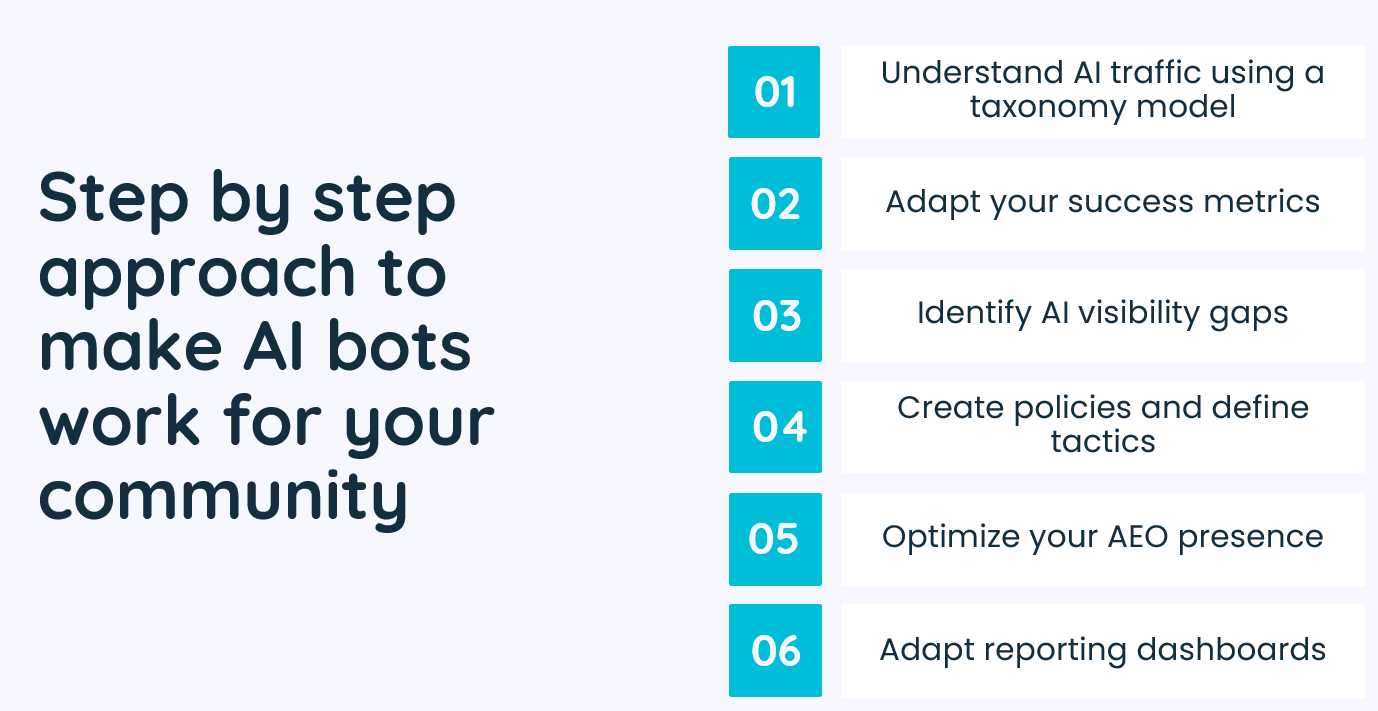
1 - Understand AI traffic through a taxonomy model
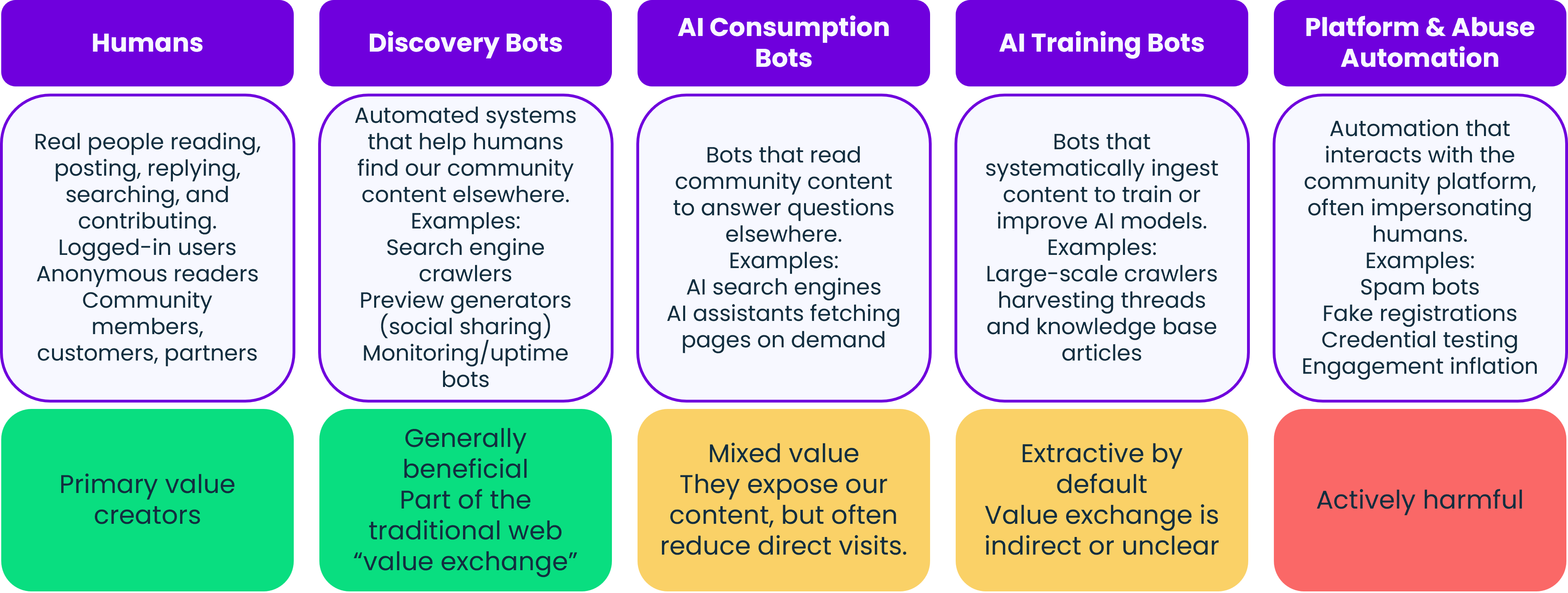
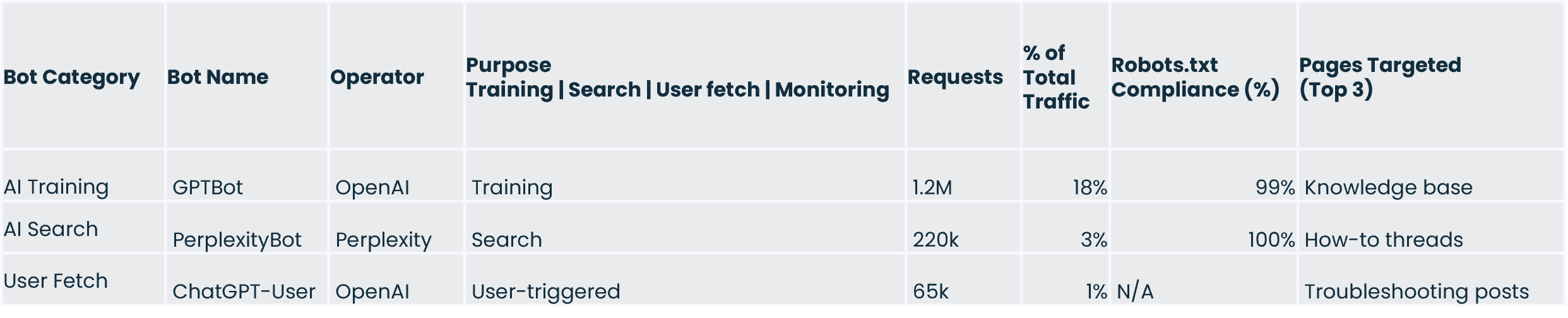
Not all bots are equal, and not all automation is harmful. But likewise, not all bots are helpful for your community and your community engagement. This Bot taxonomy helps us distinguish participation, discovery, and extraction. It enables measurement, policy, and control decisions.
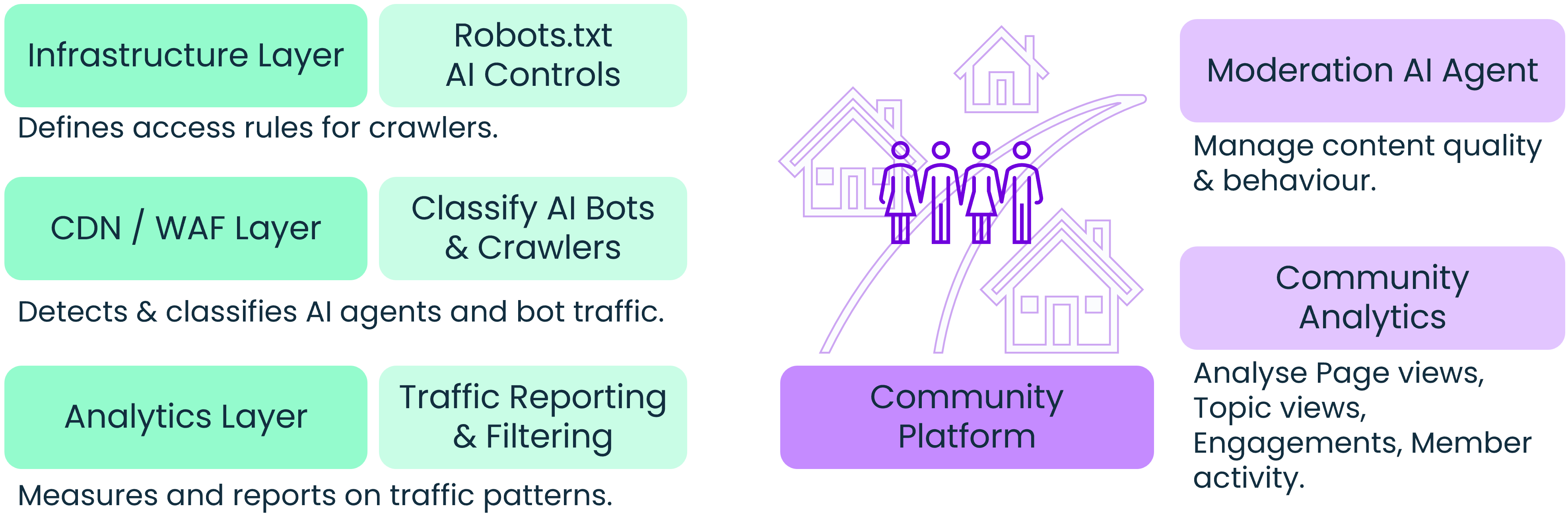
Use tools to get insight. There are tools which can help you get insight into bot traffic, categorizing traffic and improving your AI visibility.
2 - Adapt your success metrics
A decline in traffic does not necessarily mean reduced value. Expect fewer clicks but higher quality usage. Brand trust and authority are being conferred inside the AI experience itself. Make sure your Community content is being used as trusted grounding material, not just indexed but also cited! Move discussions from “AI is good/bad” to: “Which kinds of automation align with our community purpose?”. If your use case is case deflection, include in your success metrics a KPI for support tickets deflected via AI citation. Other examples are KPI's for Expansion signal: AI answers driving feature adoption, Churn risk: customers getting wrong answers from AI, Retention correlation: customers who found answers via AI.
3 - Identify AI visibility gaps
Track where your brand appears in AI (and where not!). If you want to be cited by Bots, you need to be in that search selection pool. Which means your content needs to rank! Did the content on your community platform successfully answer the user’s question inside the AI experience? What are people searching for? What is your top 20 content which should be found and cited?
4 - Create policies and define tactics
Define what AI traffic aligns with your community objectives. Do a governance and readiness scan for AI. Create your Robots.txt to manage what the good bots do with your content. Build your community Bot Taxonomy and a detailed breakdown sheet.
5 - Optimize your AEO presence
There is a Fundamental SEO shift from keyword optimization to understanding your audience to cover topics they’re interested in. Apply tactics to improve discoverability and citation (Query fan-outs, Title- Snippet- URL friendliness). Create content that gets discovered in search and AI, and earns citations. Titles need to be semantically relevant. Snippets are useful for crawling. Natural language URL slugs increase citation rate. Fresher content gets cited more. Content that matches fan-out queries well will get cited. Content that doesn’t will be retrieved, but ignored in citations.
6 - Adapt your reporting dashboards
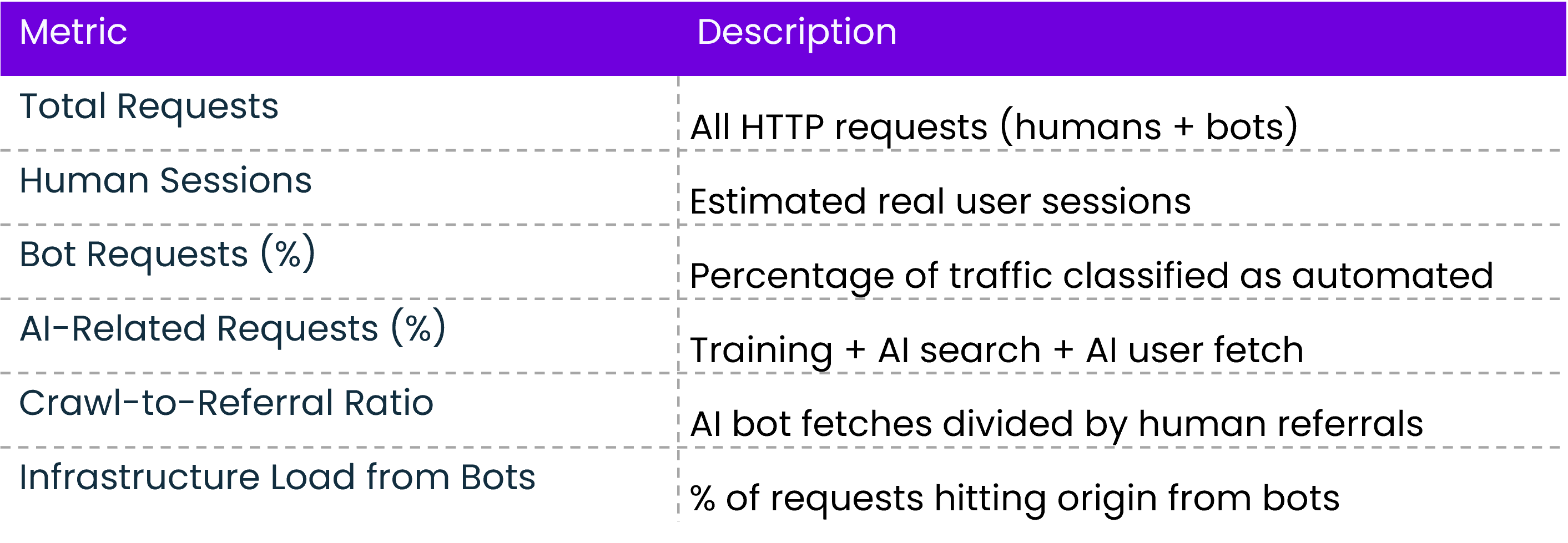
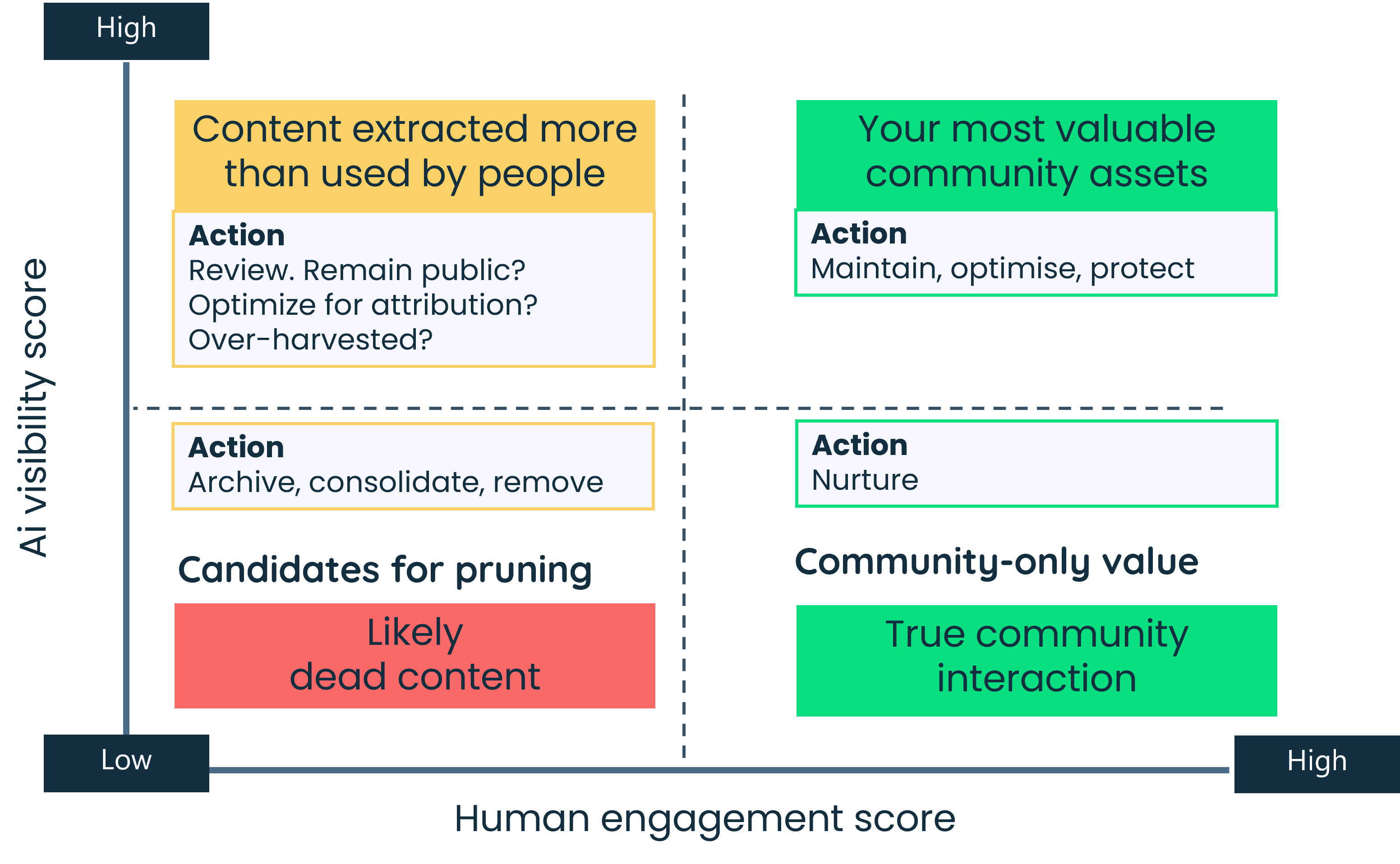
You need new success metrics and define KPI’s for the AEO world. Create an AI visibility vs engagement quadrant to identify if your community content is just a feeding ground for AI Bots, or if they are strategic assets.
Build your AI success reporting dashboards to distinguish human community engagement from AI, search, and automated traffic and show impact on content, trust, and operations. Execs see immediately how much “attention” is consumption versus participation.
include a Referral & Attribution view for reporting to your leadership to show whether AI exposure leads to actual community participation.